




































Introduction
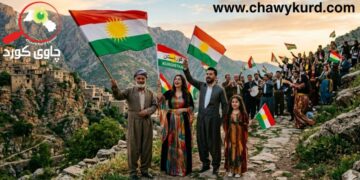
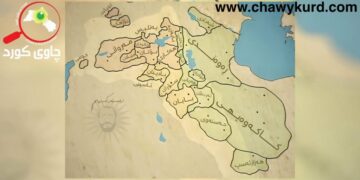
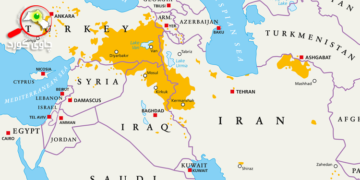
Among the stateless peoples of the world, few are caught in a self-definition dilemma as deep as the Kurds. Divided for over a century among Iran, Turkey, Iraq, and Syria, the Kurdish community still faces a fundamental question: Who are we? While saying “we are Kurds” seems simple, it is only a partial answer. The core issue is whether ethnicity and language alone suffice for a national identity, or if true identity requires belonging to a historic homeland: Kurdistan. Here lies the distinction between Kurdishness (an ethno-cultural identity) and Kurdistanism (a geopolitical and patriotic identity). Today’s crisis is not one of Kurdishness, but of a lack of Kurdistanism—stagnation rooted in both external assimilation policies and internal societal shortcomings.
Conceptual Differences and the Shift in Awareness
Kurdishness defines an ethnic identity based on shared language, culture, and ancestry rooted in antiquity. Conversely, Kurdistanism transcending ethnicity; it is a conscious allegiance to Kurdistan as a unified homeland, rendering artificial borders irrelevant. Philosophically, Kurdishness asks, “What is my ethnicity?” while Kurdistanism asks, “Where is my homeland?”
Many who identify as Kurds define their political existence within the borders of their occupiers, viewing themselves merely as “Kurds of Iraq” or “Kurds of Turkey.” This reflects the difference between an ethnic group and a politically conscious nation. Without national awareness, identity dissolves into foreign structures, whereas territorial consciousness prompts self-determination.
Occupying states have long feared this comprehensive territorial awareness. They tolerate the term “Kurd” to an extent but restrict or ban “Kurdistan.” This detaches identity from geography, causing newer generations to embrace their ethnicity while failing to grasp their organic link to the land. Furthermore, decades of living under different educational and political systems have fragmented the Kurdish worldview.
Internal Deficiencies and Assimilation Policies
Domestically, fatal flaws like regionalism have weakened the concept of a shared destiny. The Kurdish intelligentsia has also failed to produce modern theoretical literature on Kurdistanist identity. Kurdish politics remains consumed by daily struggles, neglecting the philosophical foundations of nation-building. Consequently, when partisan loyalty replaces national identity, the nationalist project fractures.
Externally, occupying regimes employ policies of cultural erasure, changing geographic names, banning the language, and rewriting history. The most successful colonization occurs when the oppressed view the world through the conceptual lens of the oppressor. When a Kurd limits their future to the framework of Iran, Turkey, Iraq, or Syria, the occupier’s project succeeds.
Solutions and Conclusion
Overcoming this crisis requires redefining Kurdistanism in political discourse. Educational systems must teach Kurdistan’s history as unified whole, rather than fragmented parts. Furthermore, digital media should be leveraged to bridge regional divides, and civil society must actively participate in nation-building.
Ultimately, Kurdishness is the root, but Kurdistanism is the horizon. To advance, the Kurdish people must transition from a narrow ethnic awareness to a comprehensive territorial identity, making Kurdistan the core of their collective definition.