














In the tragic, deep chasm that history has carved between the body and language, a profound truth has been lost. Before language imposed itself as a dominant, hegemonic symbolic system over existence, the body was the sole domain of reality—a truth that required no definition, defied logical negotiation, and was experienced in its absolute authenticity. The sudden tension of a muscle in a moment of deep fear, the racing heartbeat in the face of danger, or the instinctive blink of an eye when witnessing something extraordinary—these were truth itself in its raw, naked, and unblemished form, not a weak, secondary expression of it. Ontologically, humanity’s fall into the realm of language was a descent into a secondary, artificial world; a fabricated construct where words became a thick veil, obscuring and distorting genuine experience. Language, by its generalizing and classifying nature, dissolved the unique, individual experience of the body into a cold, controlled, and collective mold, recording the first and deepest rupture of human alienation from the primal self.
In the history of philosophy, a radical view posits that human civilization is built upon a resentment of the body, the suppression of instincts, and the taming of desires. Reason and consciousness, fundamentally born from language and semiotic systems, emerged as policing mechanisms to control the grander, wilder intellect of the body. Truth resides in instincts, repressed desires, and that blind, primordial will to live pulsing from the depth of cellular existence—not in the dry, abstract concepts fabricated by language in a vacuum. When language transforms into the vocabulary of morality, politics, religion, and ideology, it operates as an instrument of power designed to render bodies weak, guilty, and ultimately obedient. Thus, the truth hidden within a simple bodily movement is “pre-moral” and “pre-linguistic”; a brutal, naked reality before language distorts it with artificial values of good and evil, legitimate and illegitimate, sacred and profane, to serve the dominant system.
The Kurdish Body as an Existential Archive
We, the Kurdish people, exist in the world primarily through our bodies. This is not a mere metaphor, but a fundamental phenomenological truth that acquires a profound existential dimension within our bleeding history and harsh geography. Our body is not just a collection of biological organs suspended in space; it is the lived body that stands as the first and most honest witness to our existence on this wounded land. Long before learning political concepts from books, our bodies experienced “Kurdishness” through direct contact with the freezing mountain air, the scorching heat of the plains, the taste of bread and yogurt drink, and the wild, energetic rhythm of the Halparke (Kurdish dance). This is a pre-critical, bodily knowledge born of action, sweat, and survival, not the political discourse of elites in closed rooms. Language arrives late, attempting to fragment this vibrant, multi-dimensional experience into dry ideological frameworks. Yet, in this translation from body to language, the warmth and vitality of the experience perish, leaving behind lifeless slogans often weaponized against the body itself.
Silence, Trauma, and the Modern Chasm
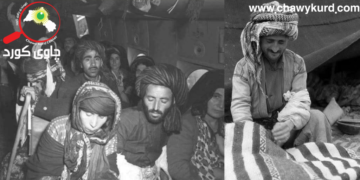
This ontological struggle culminates in tragedy within the Kurdish historical context. When the Kurdish language itself was banned by occupying regimes, the Kurdish body was forced to bear the weight of language, becoming the final fortress of identity and the living archive of suppressed memory. The meaningful silence of an Anfal-surviving mother whose tears became words, the defiant stomping of feet in mountainous dances, or the deep wrinkles mapping a farmer’s face—all became a supreme bodily discourse resisting erasure. The Kurdish body became a political text; under the mustard gas of Halabja and in the deserts of Nugra Salman, when language failed to express the catastrophe, the body itself became the absolute witness.
Today, in the post-uprising era of self-rule, this conflict turns inward. Language is no longer banned by external oppressors but is hollowed out by local elites through low-level partisan warfare and populist media. While official discourse boasts of sovereignty and prosperity, the exhausted bodies of citizens on the streets narrate stories of systemic injustice, unpaid wages, and broken dreams. Truth has fled the speeches of leaders, seeking refuge in the silent protest of a teacher striking on the asphalt, or the desperate gaze of a youth entrusting their body to the waves of the Aegean Sea. In an era of cheapened words, the body remains the final sanctuary where truth breathes nakedly, refusing to surrender to the lies of the dominant discourse.