


































“The Situation in Iran and the Arrival of the Red Army”
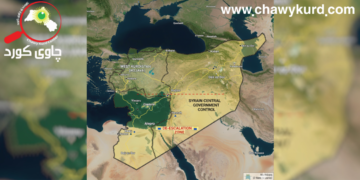
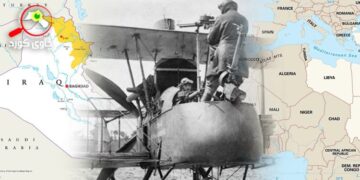
During the years of the Second World War, Iran under the era of Reza Shah had drawn closer to the Axis powers against the Allies. Nazi Germany’s expansionist ambitions and their espionage activities had flourished significantly within Iran; they intended to utilize Iranian territory for their own interests, gain access to the Persian Gulf, and bring the oil of both Iran and the Gulf under their control. On August 25, 1941, the Soviet Red Army from the north, along with the British and Americans from the south, occupied Iran in opposition to the Germans. Reza Shah’s authority could not withstand their attacks and was unable to mount any form of defense. Reza Shah’s administrative apparatus collapsed; he was exiled to an African island, and his son, Mohammad Reza Shah, was installed in his father’s place. By occupying Iran, the Allies aimed to facilitate the transit route for American weapons and supplies to the Soviet Union, as the Soviets were in desperate need of weaponry due to the onslaught of Hitler’s forces, who had already occupied a portion of their territory.
The Allies intended to facilitate the delivery of US weapons to the Soviet Union by invading Iran, which was in dire need of weapons because of the attack of Hitler’s forces and had occupied part of its territory.
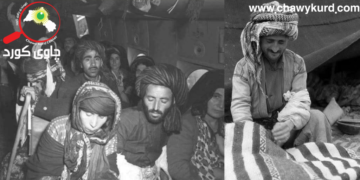
In the introduction to his book, From Where to Where, Hemn Mukriani says: “One day in June 1941, when I went to farm, our workers were ringing their wings and I was sitting next to them, then suddenly two planes approached and threw the paper down. Everyone ran to see what it was. A woman came in front of everyone and gave me a piece of paper there was nothing, but we were very afraid of the Russians.” On the day the Red Army entered Mahabad, the Soviet commander told the people of Mahabad on the street of the Red Mosque: “The Red Army has come to help you. The Russians had appointed a Russian officer of Azerbaijani origin in charge of political and security in Mahabad and had several soldiers under his command.
“ZEKAF and Kurdish Youth”
The developments that took place in the region and the Soviets took power in the region created a favorable environment for political and cultural struggle in Mukriyan region for several years. In the presence of two representatives of the Hiwa Party, Mirhaj Ahmad and Mustafa Khoshnaw, a number of prominent and intellectual figures of Mahabad founded a political association called ZK/Kurdish Revival in Haji Daud Garden near Mahabad on August 16, 1942. As Hemn Mukriani places it: “Besides being a political association, it was also a social and moral association. Its members came from all sections of Kurdish society.
A few months before the establishment of ZEKAF, a youth organization was established in Mahabad. Ghani Blurian was the founder of the newspaper. When a Russian officer brought the newspaper Reya Taze, published by Kurds in Soviet Armenia, to Mahabad this gave rise to the idea of creating a youth organization. After consulting and gathering a number of fellow students in the Pahlavi High School in Mahabad, in March 1941, they established the Kurdish Youth Organization with the participation of 1,300 young students and appointed Ghani Blorian as the first head of the Kurdish Youth Organization. After the establishment of ZEKAF, the Kurdish Youth Organization decided to become a member of Komala and joined its organizations and changed its name to ZEKAF Youth Organization.
Mother of the Country and Source of Income”
ZECAF had no state or even regional resources, so its income came from monthly membership collections, sales of publications such as Nishtiman magazine, book publishing and plays.
“Everyone paid their monthly subscriptions with the utmost happiness and bought Komala’s publications at several times the fixed price. One of the ways he raised funds for ZEKAF was to present a play called “Mother of the Country”. Ghani Blorian, head of ZEKAF’s youth organization, says in his memoirs: “The ZEKAF leadership had received a play called “Mother of the Country”.
Ghani Blurian: “The Motherland exhibition had a lot of resonance and we collected a lot of donations and had an unprecedented effect on people’s feelings. After our return to Mahabad, a number of Shino personalities came and became members, it was artistically and even intellectually incomplete. Few people did not go and everyone who went cried and moved the feeling of Kurdishness. In addition to political propaganda, he also earned a lot of money and enriched Komala.”