






























Lebanon is a country defined by deep religious and sectarian diversity. Beyond its Christian and Muslim populations, profound internal divisions exist—most notably between Sunni and Shia Muslims. From its inception, Lebanon was constructed on colonial-political foundations rather than a unified national identity. Its statehood evolved through distinct historical phases:
1. The Foundational Phase (1916–1926)
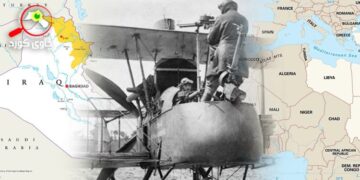
Following the secret Sykes-Picot Agreement, Britain and France divided the remnants of the Ottoman Empire, granting France the mandate over Syria and Lebanon.
- 1918–1920: Following the Ottoman collapse, France officially took control under a League of Nations mandate.
- The Creation of Greater Lebanon (1920): France deliberately carved Lebanon out of Syria to establish a Christian-majority state under its sphere of influence.
- The Declaration of the Republic (1926): The Lebanese Republic was proclaimed on May 23, 1926, though it remained under strict French tutelage until 1943.
2. The National Pact of 1943
The National Pact was an unwritten agreement between Christian and Muslim elites to secure independence from France. Christians relinquished French protection and accepted Lebanon’s Arab identity; in return, Muslims abandoned the ambition of unifying Lebanon with Syria. This pact established the foundational architecture of the modern Lebanese political system:
- The Sectarian Power-Sharing Formula: The President must be a Maronite Christian, the Prime Minister a Sunni Muslim, and the Speaker of Parliament a Shia Muslim. Parliamentary seats were originally split in a 6:5 ratio favoring Christians over Muslims.
- External Neutrality: Lebanon pledged neutrality between Western and Eastern blocs, avoiding total integration into the Arab sphere.
The Structural Flaw: The National Pact stripped the state of its supreme authority, transforming it into a sectarian joint-stock company. Civil loyalty shifted from the state to sectarian leaders. Furthermore, the system was frozen around a 1932 census. By the 1970s, demographic shifts yielded a Muslim majority, completely undermining the legitimacy of a system where a minority retained dominant power.
3. Civil War (1975–1990) and the Taif Agreement
The institutional structural flaws culminated in the devastating 15-year civil war. While driven by ideological clashes between Arab-leftist factions and Western-aligned liberal currents, religion became the banner of conflict.
The 1989 Taif Agreement ended the war by equalizing parliamentary seats between Christians and Muslims and shifting executive powers to the Sunni Prime Minister. However, it failed to dismantle sectarianism, allowing wartime warlords to become political elites. This birthed a “state within a state,” epitomized by Hezbollah. Possessing its own military, financial, and social institutions, Hezbollah derives its legitimacy from the ideology of “Resistance” rather than the Lebanese constitution, leaving Lebanon with a fractured monopoly on violence.
4. The Swiss Contrast
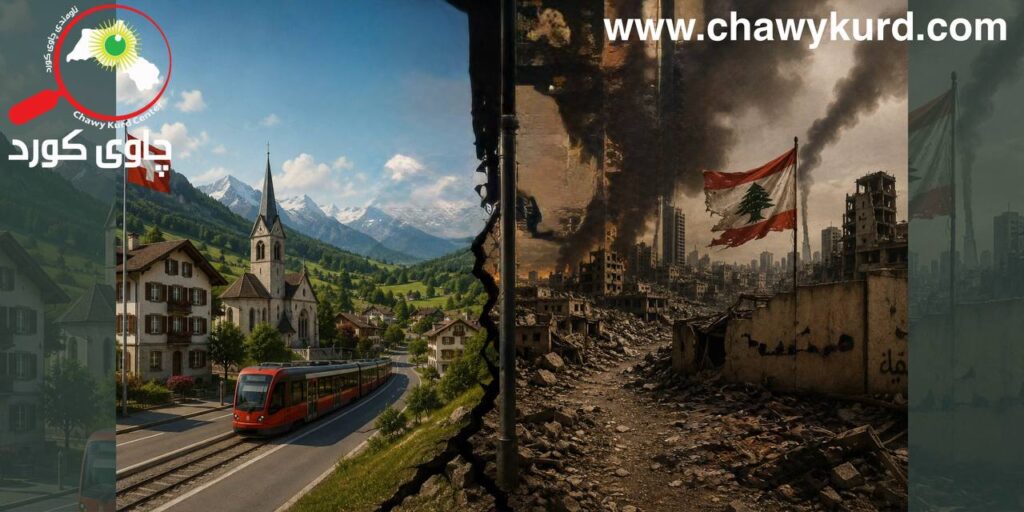
While Lebanon represents a failure of sectarian division, Switzerland stands as a model of pluralistic success. Switzerland accommodates four languages and various religious denominations through a shared political identity (“Swissness”), direct democracy, and a robust federal system across 26 cantons. In Switzerland, the state and the rule of law remain strictly neutral and supreme above all sub-identities. In Lebanon, sectarian identity trumps citizenship, turning the state into an arena for proxy conflicts backed by regional powers like Iran and Saudi Arabia.
Conclusion
Lebanon’s ongoing economic collapse, which began in 2019, exposed the terminal failure of its sectarian economic and political model. The country serves as a stark warning for the Middle East: while religious or ideological fervor can mobilize people during resistance, it cannot build a stable state. Modern statehood thrives only when secular citizenship stands supreme over sectarian allegiances.