




































Introduction
Since the aftermath of World War II, the United States has consistently sought expansion and the imposition of its hegemony across the globe utilizing military, economic, diplomatic, and cultural instruments. It has persistently and rigorously endeavored to protect its national and security interests worldwide. Historically, the Middle East has been a region fraught with conflict and instability. However, over the past few decades, the sole paradigm shift has been the erosion of traditional state imperialism and the decline of state monopolies over military force and political decision-making.
Currently, non-state actors—encompassing militias, armed organizations, and local forces—have emerged as the primary architects and drivers of regional events. Consequently, U.S. national security in the region can no longer be safeguarded exclusively through interstate relations with governments; rather, it is directly intertwined with how Washington manages these groups, some of whom are viewed as allies and others as severe threats.
The Theory of Non-State Actors in International Relations
The theory of non-state actors is one of the most prominent and pervasive subjects in contemporary international relations. Traditionally, particularly through the lens of the Realist School, the sovereign state was viewed as the sole primary actor on the international stage. However, with the advent of globalization and rapid technological advancement, this perception shifted, prompting the rise of alternative theories that account for other actors. This marked the realization of the importance, role, and influence of entities operating beyond the state framework.
Definition: Non-state actors are organizations, groups, or individuals that do not belong to any specific government or sovereign state, yet possess significant power, financial resources, or social standing, enabling them to directly influence international politics, the global economy, and international security.
Conceptualizing National Security
National security has become a paramount concern, a haunting challenge, and a top priority for every authority and government, whether small or large, developed or developing. This concept holds vital relevance to the past, present, and future of societies; no nation can feel truly secure without ensuring its national security. In its absence, a nation remains perpetually exposed to threats from neighbors and superpowers, living in a constant state of volatility.
Historically, when one country began to rearm, neighboring states felt insecure and initiated their own arms races, trapping the first country in a cycle of heightened insecurity. This “security dilemma” forced a conceptual redefinition of national security to encompass economic, diplomatic, and social dimensions alongside military strength.
- Arnold Wolfers defines national security objectively as “the measure of the absence of threats to acquired values” and subjectively as “the absence of fear that such values will be attacked.”
- Trager and Kronenberg define it as that part of government policy whose objective is the creation of national and international conditions favorable to the protection of vital values.
- Henry Kissinger conceptualizes it as “any behavior a society adopts to protect its right to survival.”
- Robert McNamara asserts that “security is development, and without development, there can be no security.”
In general, national security implies achieving a stable environment free from fear, specifically aimed at securing a group of people bound by a shared territory, history, culture, and common interests—known as a Nation.
U.S. National Security
U.S. national security comprises the comprehensive strategy of the United States to protect its territory, citizens, economy, and political values from domestic or foreign threats. This concept extends far beyond geographic borders; it encompasses safeguarding global U.S. interests and maintaining military and economic preeminence internationally, frequently executed by reinforcing alliances like NATO.
Non-State Actors and U.S. Security in the Middle East
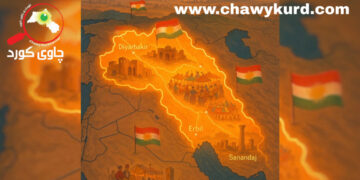
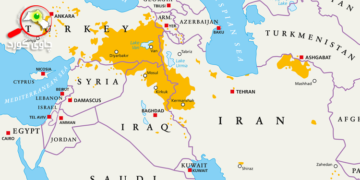
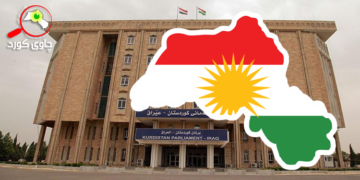
In international relations, global and regional upheavals over the past few decades—such as the events of September 11 and the “Arab Spring”—sparked a rigorous debate: Do international relations theories only analyze the state? Can they only treat the state as the sole unit of analysis? Or should the analytical framework expand to include non-state actors and semi-independent, de facto entities (such as the Kurdistan Region)?
A key conclusion of this debate is that non-state entities pose a profound challenge to classical interpretations of legitimacy, sovereignty, and recognition. Hence, rethinking traditional theories became essential. Non-state entities can no longer be viewed as external anomalies; they play a central role in restructuring equations. In many dimensions, these entities behave precisely like states, acting as rationalist, unified actors that institutionalize their foreign policy and decision-making processes. Nevertheless, the lack of international recognition continues to dictate their behavior. Because their survival is not guaranteed by international law, they rely on alternative survival strategies, often depending on a specific patron state.
Pro-U.S. Non-State Actors
1. The Kurdistan Regional Government (KRG)
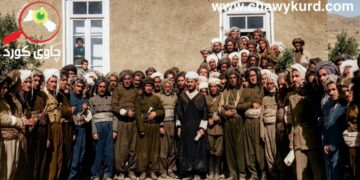
The Kurdish struggle for independence as a large, stateless nation traces back to the post-WWI era and the annulment of the Treaty of Sèvres by the 1923 Treaty of Lausanne, which neglected Kurdish national rights. Throughout the twentieth century, U.S.-Kurdish relations fluctuated between support and abandonment. For instance, following initial backing in the 1970s, the U.S. abandoned the Kurds in 1975 after the Algiers Agreement, leaving them vulnerable to the Ba’ath regime’s brutal Anfal campaigns and chemical attacks. However, after the 1990 Gulf War, relations entered a new phase as the U.S. established a No-Fly Zone to protect the Kurds, and later brokered the 1998 Washington Agreement to end the civil war between the KDP and PUK.
Official diplomatic ties flourished post-2003. The KRG opened a representation office in Washington in 2004, and the U.S. established a consulate in Erbil in 2011, later investing $600 million to build its largest consulate general there. Despite the U.S. spending $25 billion on the Iraqi army, that army abandoned Mosul to ISIS without resistance in 2014, leaving behind massive stockpiles of weaponry. This exposed the Kurdistan Region to severe military, humanitarian (hosting over a million refugees), and economic crises (compounded by Baghdad cutting Erbil’s budget).
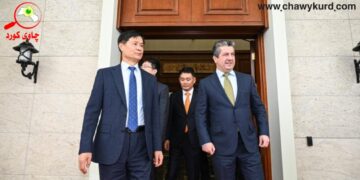
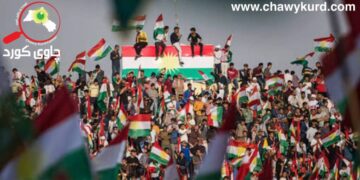
During this critical juncture, the Peshmerga forces became a primary U.S. partner in defeating ISIS. Although the Trump administration penalized the Kurds in 2017 by aligning with Baghdad following the independence referendum—which led to Iraq reclaiming Kirkuk and expanding Iranian hegemony—the KRG and Peshmerga remain strategic U.S. partners for three core objectives:
- Combating terrorism.
- Maintaining peace among diverse components.
- Countering the expansion of Iran and its proxy militias in Iraq.
This military partnership was formalized via a direct Memorandum of Understanding (MoU) signed between Erbil and Washington in 2016, committing U.S. financial and military support to the Peshmerga. Geopolitically, Russia has attempted to rival U.S. influence by not openly opposing the 2017 referendum to draw U.S. allies away, yet Washington remains unwilling to cede the strategic positioning of the KRG and Iraq to Russia or Iran.
Several factors shape U.S. strategy regarding Kurdistan’s independence:
- First: The U.S. fears the collapse of failed states and thus pursues “nation-building” strategies to foster democratic, pro-Western systems, though interventions in Afghanistan and Iraq ultimately failed.
- Second: Post-2001 counter-terrorism priorities led the U.S. to believe that only strong, centralized democratic governments could prevent radical Islamic groups from exploiting weak states, justifying a doctrine of preemptive warfare.
- Third: The U.S. avoids intervening in domestic conflicts unless they threaten regional stability, risk WMD proliferation, or shift the balance of power toward rivals like Russia and China.
- Fourth: Washington fears that Iraq’s partition would lead to a radical Sunni expansion and absolute Iranian dominance in Shia areas. It also worries that Kurdish independence would trigger a domino effect of minority identity demands, destabilizing its Arab allies.
- Fifth: The Kurds in Iraq serve as a vital guarantor of the balance of power, preventing further systemic collapse.
- Sixth: The U.S. requires its NATO ally Turkey, which harbors deep security anxieties regarding Kurdish autonomy that could affect its own Kurdish population or its border with Syria. Washington balances this by reassuring Ankara regarding the arming of Syrian Kurds to prevent Turkey from aligning closer with Russia and Iran.
2. Rojava (Western Kurdistan / Northern Syria)
The issue of Rojava has created an intricate, trilateral relationship between the U.S., Turkey, and Kurdish forces. The Kurdistan Workers’ Party (PKK), founded in 1978, shifted its strategy from demanding an independent state to seeking autonomy. This issue remains a central friction point between Ankara and Washington. While the U.S. designates the PKK as a terrorist organization and backs Turkish counter-operations, it simultaneously views the unresolved Kurdish issue as a barrier to Turkey’s democratization.
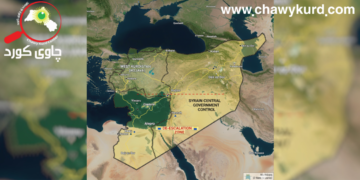
Following the 2011 Syrian crisis, the withdrawal of Syrian government forces from Kurdish areas created a power vacuum filled by the Democratic Union Party (PYD) and the People’s Protection Units (YPG), laying the groundwork for an autonomous self-administration.
The strategic partnership between Washington and Syrian Kurds began during the 2014 battle of Kobane through U.S. airstrikes, later evolving into extensive military aid and training for the Syrian Democratic Forces (SDF). This collaboration forced the U.S. to walk a diplomatic tightrope between its NATO ally, Turkey, and its highly effective local partner against ISIS. Ankara adamantly maintains that the YPG and PKK are two sides of the same coin, whereas U.S. officials officially attempt to decouple them. In 2018, Washington placed bounties on three top PKK leaders to appease Turkey while attempting to legitimize its alliance with the SDF as a bulwark against Iranian influence. Conversely, Russia has capitalized on this rift by refusing to designate the PKK as a terrorist group and granting visas to PYD leaders to undermine U.S. influence.
Syria remains a theater for major power rivalries. The dualistic U.S. policy toward the PKK and YPG persists; a premature U.S. withdrawal could compromise its regional standing and leave Syrian Kurds vulnerable to Turkish or Syrian regime offensives. Consequently, it is in the interest of the PYD and YPG to adopt a moderate stance and distance themselves from the PKK, as Turkey continues to pressure the international community to recognize the YPG as a terrorist entity. The future of the region hinges on Washington’s long-term commitment to this local partnership.
Anti-U.S. Non-State Actors
1. Al-Qaeda
Al-Qaeda is a transnational jihadist organization founded between August 1988 and early 1990 during the Afghan jihad, advocating for international holy war. Highly concentrated in Yemen, Afghanistan, Syria, and Somalia, it has launched asymmetric attacks against military and civilian targets globally, most notably the September 11, 2001 attacks. Al-Qaeda aims to end foreign influence in Muslim nations, establish a global caliphate, and enforce strict Islamic law, operating on the premise that a Christian-Jewish alliance is plotting to destroy Islam. Its tactics rely on coordinated suicide operations executed by members who have pledged allegiance to its leadership or trained in specialized camps.
Critics argue that the U.S. “War on Terror,” characterized by trillion-dollar expenditures and aggressive military interventions, has exacerbated instability in the Middle East and failed to comprehensively protect its citizens. Despite killing Osama bin Laden in 2011, the U.S. has not eliminated Al-Qaeda because its strategy long supported regional autocrats, neglected democracy and human rights, and ignored complex socio-sectarian dynamics (such as the Saudi-Iran and Sunni-Shia rivalries). Furthermore, absolute U.S. support for Israeli security at the expense of broader regional stability provided Al-Qaeda with fertile ground to exploit public grievances against Washington. Relying solely on military strategies will not eradicate this threat and leaves U.S. interests permanently endangered.
2. ISIS (The Islamic State)
An armed terrorist organization adhering to a global jihadist ideology, ISIS aims to establish a state governed strictly by its interpretation of Islamic law. Operating extensively across Iraq and Syria, it gained global infamy in 2014 by capturing Mosul. Its rapid expansion across Mosul and Salahaddin, followed by assaults on the Kurdistan Region and deeper into Iraq, shocked the international community.
Saudi Arabia swiftly designated it a terrorist organization, followed by the United Nations, the U.S., the UK, Australia, Turkey, Syria, Israel, Indonesia, Iran, and India. ISIS rejects international norms, labeling the UN as a source of global conflict and human rights organizations as biased and criminal. Structurally, the group operates various specialized councils—including financial, leadership, military, legal, security, and media committees. Utilizing its Bayt al-Mal (treasury), it became the wealthiest Islamic terrorist organization at its peak, eclipsing Al-Qaeda.
However, experts argue that U.S. strategy—particularly the Trump administration’s sudden decision to withdraw from parts of Syria—was flawed, as it ignored the regional balance of power and enabled Iranian and Russian influence to expand. Despite the elimination of top ISIS leaders, the group persists via sleeper cells because the root economic, social, and political grievances, along with the massive displacement crisis, remain unaddressed. ISIS is a byproduct of domestic tyranny and the marginalization of democratic governance by Washington and its allies. Without a clear strategy for genuine political stabilization, U.S. regional influence will continue to wane.
3. The Houthis in Yemen
Internal political shifts transformed Yemen into a fierce regional proxy war. Iran expanded its strategic depth by providing the Houthis with financial, military, and ballistic missile support, directly threatening Saudi interests and international maritime commerce. Conversely, the U.S. (particularly during the Trump administration in 2019) continued arming Saudi Arabia and supporting the Arab Coalition to check Iranian influence, despite mounting congressional opposition. Due to these foreign interventions, weak infrastructure, and historical internal fractures that the United Nations failed to resolve, Yemen has degraded into a failed state suffering from a profound humanitarian catastrophe and a perpetual civil war.
4. Hezbollah in Lebanon
Lebanon’s Hezbollah is a powerful Shia political party and paramilitary organization heavily backed by the Islamic Republic of Iran, led by Hassan Nasrallah as its Secretary-General since 1992. Emerging in the early 1980s during the Israeli occupation of Lebanon, it was established with Iranian financial and logistical backing to mobilize and protect the traditionally marginalized Shia population of southern Lebanon. Its ideological roots lie in the Shia Islamic revivalism of the 1960s and 1970s.
Following Israel’s withdrawal from Lebanon in 2000, Hezbollah resisted intense pressure to disarm, instead expanding its military wing, known as the “Islamic Resistance.” The group gradually institutionalized its presence within the Lebanese state through its political wing, the “Loyalty to the Resistance Bloc,” effectively securing veto power over cabinet decisions.
U.S. policy has consistently focused on weakening Hezbollah and rolling back Iranian and Syrian influence in Lebanon. To this end, Washington has imposed severe economic sanctions on the party’s leadership and provided over a billion dollars to the Lebanese Armed Forces (LAF) to strengthen official state institutions—though Congress frequently expresses concern that these resources could fall into adversary hands. Regionally, Hezbollah serves as Iran’s premier strategic asset, actively participating in the Syrian civil war to secure the logistical supply corridor (the Shia Crescent) stretching from Tehran to Beirut. Domestically, following the 2019 anti-corruption protests and the 2020 Beirut port explosion, public resentment against the group has risen alongside demands for independent governance. Nonetheless, buoyed by regional conflicts and Iranian backing, Hezbollah remains a potent anti-U.S. challenge.
Conclusion
The balance of power equation in the Middle East has entered a structural phase where non-state actors are no longer transient or marginal anomalies; they have transformed into the principal architects of the region’s security and geopolitical order. This shift poses a direct challenge to classical Westphalia principles and the Realist School of thought, which rigidly treat the sovereign state as the sole unit of international analysis.
Achieving long-term stability in the Middle East demands a fundamental policy overhaul. The national security of the U.S. and its regional partners, particularly the Gulf States, can no longer be sustained through temporary crisis management. Genuine resolution requires a comprehensive, multilateral security framework founded on three pillars:
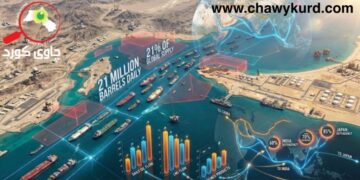
- Insulating Maritime Corridors: Disentangling global shipping lanes from regional political warfare.
- Cutting off Proxy Financing: Conditioning the disarmament of armed groups on stringent economic mechanisms and snapback sanctions.
- Formalizing Relations with Stable Entities: Recognizing stable, pro-Western non-state entities (such as the Kurdistan Region) as permanent pillars of regional equilibrium, rather than treating them as temporary leverage to be discarded when active conflicts subside.