


















































Debate among analysts about the real aims of the US war against Iran has intensified. Some have speculated that the main US goal in this war is to replicate the Venezuelan scenario, controlling Iranian oil to deprive China of discounted oil and thus prevent long-term industrial growth, and building US influence in bilateral relations in the negotiations.
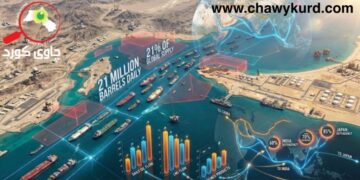
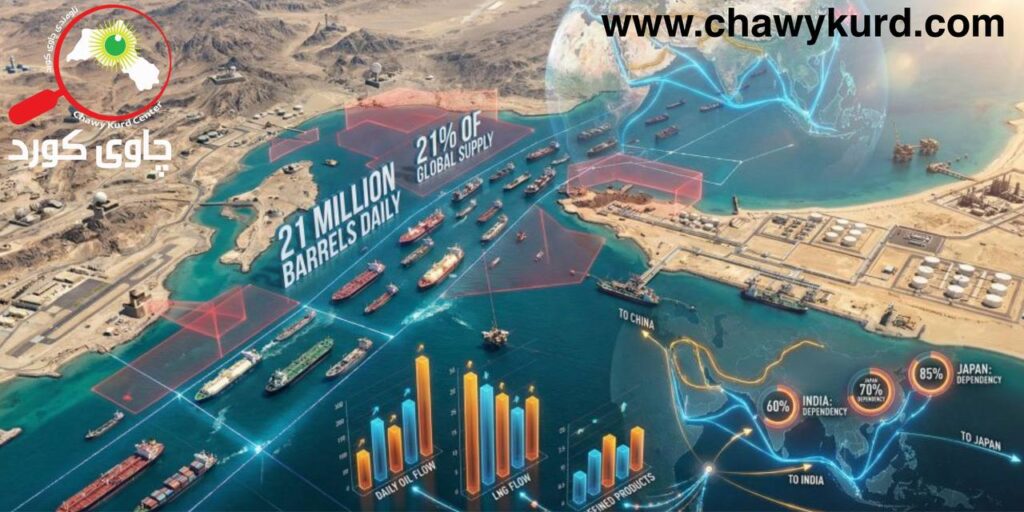
Chinese refineries rely heavily on the Gulf region for imports of oil and oil products. China’s imports from the region account for about 46 percent of its total oil imports, including Iran’s, which are expected to reach about 1.4 million barrels per day in 2025, according to data from Clear, a trading and shipping company. In addition, the Gulf region is the source of about one-third of China’s total liquefied natural gas imports. China also imports about 40% of naphtha and 45% of LPG from the Gulf region. However, despite these high figures, the Gulf region accounts for about 30% of China’s total oil needs when domestic production and oil imports from other regions such as Russia, Africa and Latin America are taken into account.
The same comparison applies to natural gas. While the region accounts for about a third of China’s imports (27% coming from Qatar alone), this represents only 15% of imports and only 6% of total gas demand, considering that the majority of China’s power plants rely on coal rather than natural gas. Despite the large volume of Chinese naphtha imports from the region, they account for only 7% of total domestic demand, which will reach 2.2 million barrels per day in 2025. As for liquefied petroleum gas (LPG), the actual figure is 18% of China’s total consumption, a relatively high percentage.
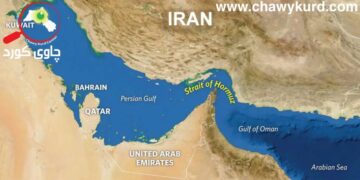
This analysis attempts to answer the question: To what extent does the closure of the Strait of Hormuz, and the disruption of oil exports from the Gulf region to China, affect China’s energy security, and does this constitute a genuine US diplomatic pressure card against Beijing?
China’s sectors most affected by the closure of the Strait of Hormuz”
The sectors in China most affected by the U.S. embargo on the Strait of Hormuz and, the closure by Iran, are small, independent refineries in Shandong province. These refineries primarily rely on discounts of $8-10 per barrel on Iranian oil to compete with major oil companies for market share. Imports from Iran account for only about 13% of China’s total offshore oil imports. The closure of the strait, coupled with a drop in their share of discounted Venezuelan oil, means that these refineries will lose this discount, significantly affecting their profit margins amid intensifying domestic competition due to reduced domestic demand.
The US administration’s decision to lift sanctions on Iranian oil exports temporarily at sea in late March to stabilize prices also pushed Iranian crude oil prices higher. In April, Chinese refiners reportedly bought Iranian oil at higher prices than Brent crude for the first time since 2022, fueled by higher prices across the market and higher shipping costs due to rising insurance premiums. This scenario suggests that increasing costs are putting significant pressure on small refineries. While these refineries could increase Russian oil imports (which is already happening), they face a tough Russian challenge in increasing production capacity, especially given the US Treasury Department’s decision to allow India to resume imports of Russian oil due to the war.
Other large, independent refineries are also likely to be affected by supply shortages, such as Rongsheng Petrochemical in Zhejiang Province and the Sinopec-Aramco joint venture in Fujian, both of which rely primarily on Saudi oil supplies. Higher prices will also affect large state-owned refineries, putting pressure on their profit margins. These refineries are likely to increase imports of Russian oil, considering that the U.S. amnesty for Indian refineries is temporary and may end with the end of the war.
This indicates a long-term Chinese trend towards diversifying sources of oil imports and gradually reducing dependence on the Gulf region. As for the industrial sector, its impact is particularly evident in the supply of liquefied natural gas. As noted earlier, the needs of the Gulf region do not make up a large portion of total demand. However, the twin challenges of rising prices and falling availability may emerge over the next three to six months. This is due to the fact that long-term supply contracts are linked to oil prices (most Gulf gas contracts), whereas pipeline gas contracts involve longer delivery delays, offsetting the effect of price increases throughout the year.
Evidence on China’s energy mix and its impact on the Belt and Road Initiative suggest that Iran’s closure of the Strait of Hormuz and US blockade of Iranian ports will put immediate, short-term pressure on Chinese refinery and manufacturing needs. Such a situation is unlikely to provide the necessary US diplomatic clout to encourage China to put immediate and strong pressure on Iran beyond supporting Tehran and encouraging it to return to negotiations and reach a comprehensive agreement. China is expected to continue coordinating with the United States, Iran, Gulf and Arab partners and Pakistani mediation to encourage Iran to return to negotiations and balanced concessions leading to an agreement that ends the war and secures the return of normal shipping ahead of Trump’s expected visit to Beijing in May.