

















































“Clausewitz says: The object of every war is a political matter.”
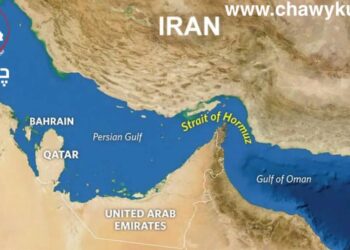
The war between Israel and the United States against Iran is one of the most complex and significant political issues of the modern era. This conflict manifests as an intricate web—not only in terms of military force but also through economic, technological, and media dimensions. Often, discourse surrounding war focuses solely on the victory of one side or the defeat of another. However, the victims—the inevitable human cost—are rarely emphasized. Ending such a war is rarely definitive; it is difficult for any side to claim absolute victory.
As history demonstrates, war is a long-term or short-term conflict—be it armed, economic, ideological, or intellectual. Unfortunately, since the dawn of humanity, it has remained one of the most accessible and quickest methods used to “resolve” problems. In reality, war generally fails to provide true solutions; instead, it deepens, complicates, and expands existing crises. Human history began with war, followed by a continuous cycle of human struggle.
War is considered one of the oldest human activities. As a subject inextricably linked to power, it has become a core component of political science. Carl von Clausewitz viewed war as a continuation of politics by other means and instruments. From the perspective of its causes—be they political (conflict over resources and interests), ideological, or economic—war remains a primary subject of study. Clausewitz, as a theoretical and practical evaluator of all facets of conflict, is regarded as the most influential thinker in strategy and military theory. He asserted that the ultimate goal of any war, regardless of its nature, is a political matter. He believed wars are reflections of policy; therefore, to control war, it must remain subject to political decision-making. When we say war is an extension of politics, it implies there are a specific political objective, a beginning, and an end.
Clausewitz argued that the political objective of war serves two purposes: either the total destruction of the enemy—ending its existence as a state—or the imposition of terms of peace. In the modern era, the first point—the complete dissolution of a state—is largely considered unlikely, though not impossible. More often, the goal is “regime change.” For instance, in a sudden historical development, U.S. President Donald Trump expressed support for regime change in Iran. When asked if he wanted to see the Tehran regime replaced, he replied: “That would probably be the best thing that could happen.” While he declined to name a successor, he noted that “there are capable people.” The second point Clausewitz mentions is the imposition of terms or hegemony over a state to protect national security and interests. Thus, like any political, economic, or social phenomenon, war requires objective scientific analysis.
War brings about an undesirable state of affairs whose repercussions linger long after the guns fall silent. The general result of war is the loss of the human self. Post-war consequences include psychological deterioration, where individuals feel worthless and hopeless. The post-war atmosphere is one of anxiety, depression, fear, stress, and a total loss of trust in “the other.” Beyond human trauma, war is a silent killer of the environment. Battlefields are ecosystems; participating states focus on kills, prisoners, and territorial gains, ignoring the environmental devastation. Often, wars are fought for control over natural resources—land, water, and minerals. The First and Second World Wars, for example, were largely driven by the pursuit of oil and energy. These were not merely regional conflicts but global catastrophes involving nations across continents, utilizing the most advanced weaponry ever seen by man.
Just as peace is politics without war, war is politics through bloodshed. However, we must confront a hard truth: as long as we remain captive to the illusion that we can produce peace through war, we will gain nothing but smoke, blood, futility, destruction, and eternal regret. Modern conflicts between superpowers and regional actors rarely end in absolute victory or unconditional surrender. The conflict between the U.S./Israel and Iran—characterized by ideological differences and asymmetric warfare—is further complicated by non-state actors like Iraqi armed groups and the Houthis in Yemen.
Potential Outcomes of the Conflict:
- Negotiated Settlement: An attempt by parties to agree on points of contention. Negotiation is the practical path for representatives to present demands. No side can impose all its conditions without making reconciliation impossible. Therefore, negotiation is a series of compromises to prevent or end war.
- Prolonged Conflict: The transition into a long-term war of attrition. Given Iran’s reliance on asymmetric strategies and regional alliances, this could evolve into continuous missile/drone exchanges and proxy wars across Iraq, Lebanon, and Yemen.
- Claims of Victory: The U.S. and Israel may claim victory by destroying Iran’s military infrastructure, energy sectors, and nuclear facilities. However, the political system may remain intact, leading to a stalemate.
The Victims: Human and Global Consequences
Gabriel Kolko, in The Age of War, noted that since 1937, military conflicts have increasingly targeted defenseless civilians. War has become a war against the people. In the Iran-Israel conflict, the victims are not just those killed in airstrikes, but millions suffering from economic instability and energy crises.
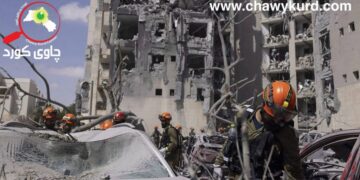
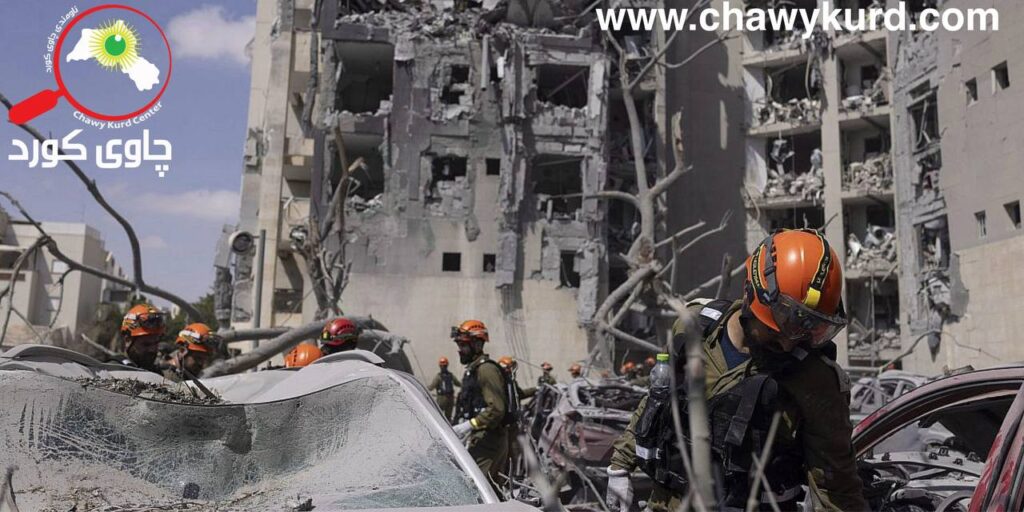
Reports indicate that in the first nine days of such escalations, over 1,200 people have been killed—the majority being civilians, including 200 children. Over 12,000 have been injured and entire residential areas, schools, and hospitals have been destroyed. In one tragic instance, 160 students were killed in a single strike on a school in Iran. War is not just killing; it is a destructive process that shatters human life, society, and the environment. The direct victims are visible, but the invisible victims—those carrying deep, lifelong psychological scars—suffer the most profound impact.