





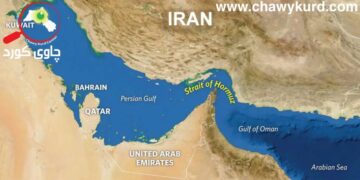




























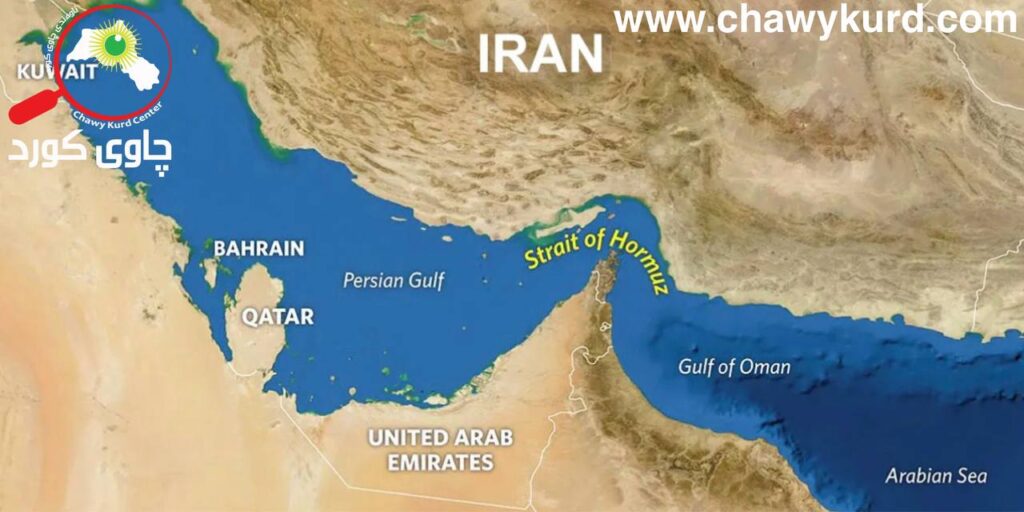
Iran’s closure of the Strait of Hormuz, one of the world’s most significant offshore energy chokepoints, poses an unprecedented test to the international economic order. When one-fifth of the world’s oil passes through a threatened narrow waterway, the security of this passage becomes not only a regional issue, but a matter of vital importance to the stability of the entire global economy. In a world increasingly dependent on steady energy flows and maritime trade, strategic sea routes have become a key component of the global economic security equation. The Strait of Hormuz, which connects the Arabian/Persian Gulf to the Gulf of Oman and the Indian Ocean, is an important artery for the flow of energy from the Middle East to global markets. About 20 percent of the world’s oil trade passes through it every day, about 20 to 21 million barrels, in addition to a significant portion of liquefied natural gas exports from the Gulf. In light of the ongoing Gulf conflict and Iran’s closure of the Strait of Hormuz, the discussion is no longer about hypothetical scenarios, but about real reactions that affect global economic stability and raise fundamental questions about energy security and international order.
Strategic Importance of the Strait of Hormuz
Approximately 20-21 million barrels of oil and fuel liquids pass through the Strait of Hormuz daily, representing about 20% of global daily consumption and about a quarter of global offshore oil trade. Nevertheless, About 20% of the world’s liquefied natural gas trade also passes through it, particularly Qatari exports heading to Asia and Europe. Given the unique strategic importance of the strait, any shift in the balance of military power around it carries implications that extend beyond the regional dimension, affecting global maritime security equations, as demonstrated in the early days of the Iran-US/Israeli military confrontation. With recent military developments affecting Iranian naval capabilities, a key question arises about the limits of Iran’s ability to influence shipping in the Strait if Iran’s capacity for direct maritime operations diminishes, and whether increased reliance on land threat actors could disrupt or significantly limit shipping.
The Strait of Hormuz crisis reveals a structural truth about the contemporary international system; Global economic stability is determined not only through political factors, but geography, which controls energy and trade flows. Strategic sea routes are no longer just transportation routes; they have become instruments of power capable of reshaping both the economic and political balance. The closure of the Strait is not merely a military escalation in the context of a regional conflict, but reflects the transformation of geography into a direct instrument of influence in the international power equation. In a world dependent on a limited number of offshore choke points, any disruption to these points reveals the fragility of the global economic system in the face of geopolitical shocks.
In this sense, the importance of the Strait lies not only in its location, but also in what it represents as a model for a new era in which security, energy and trade considerations are entwined within a single equation. The current crisis tests not only the ability of states to manage escalation, but also the ability of the international system to maintain its vital arteries in the face of accelerating geopolitical and security changes. Consequently; in the end, perhaps the most important question is not when or how the strait will be opened, but how the global energy security equation will be reshaped after this moment, in a world where geography is once again at the heart of international politics.