











































Causes and Treatments
Armed conflicts and crises pose serious challenges to education systems at national and international levels. Infrastructure destruction, supply chain disruptions, stress and insecurity widely disrupt conventional and classroom education processes. In such circumstances, smart education emerges as a strategic solution for sustaining learning. Using an analytical approach and based on recent data explores the factors that influence the diffusion of smart education globally and in the Kurdistan Region. The results of the samples show that successful implementation of smart education requires simultaneous attention to educational infrastructure, human capital, organizational support, psychological factors, and economic policies. The KRG experience also provides an important example of how education can adapt to conflict and crisis situations in a semi-autonomous and challenging environment. In recent decades, education has become one of the most important components of human and social development. However, armed conflict has always been one of the most important factors in the disruption of the education system. Recent conflicts in the Middle East, especially the war between the United States, Israel and Iran and related regional tensions, have shown that school and university education in crisis situations is seriously weak and inefficient and may disappear until the war or conflict ends.
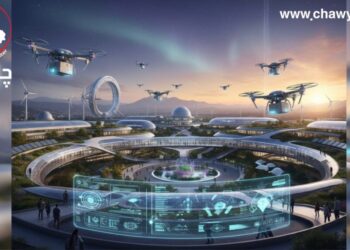
In such situations, digital technologies and smart education emerge as important solutions and become effective and important substitutes. Smart education includes the use of:-
- E-learning.
- Artificial intelligence (AI) and practical and adaptive learning.
- Online educational platforms.
- Educational data analysis.
All of which can ensure our access to education in difficult situations. The Kurdistan Region, due to its unique political and social characteristics and proximity to conflict areas, provides an ideal environment for research on how to implement smart education during war. The deployment of smart education is influenced by a number of multidimensional factors. The Technology Acceptance Model (TAM) and Information Systems Success indicate that ease of use, usefulness, infrastructure and organizational support are the most important factors for technology reception and adoption. Psychological, social and economic factors also play a mediating role in crisis and challenging environments. In a global environment, countries with strong, skilled, efficient and trained infrastructure and human resources have higher and better success in smart education. In contrast, in other war-torn and underdeveloped areas, challenges include a lack of equipment and tools, limited Internet access, and weak training of teachers and staff.
Smarting education in times of war is a strategic imperative. Success in this area also depends on factors such as technological infrastructure, digital skills, institutional support, economic policy formulation and psychological resilience. In the Kurdistan Region, the need for investment in economic infrastructure, teacher training and international cooperation is increasingly felt, which is the main condition for stability, unity, continuous training and strengthening in crisis management, strategic planning and policy based on science and research.