








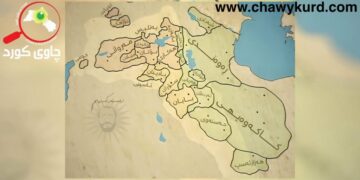











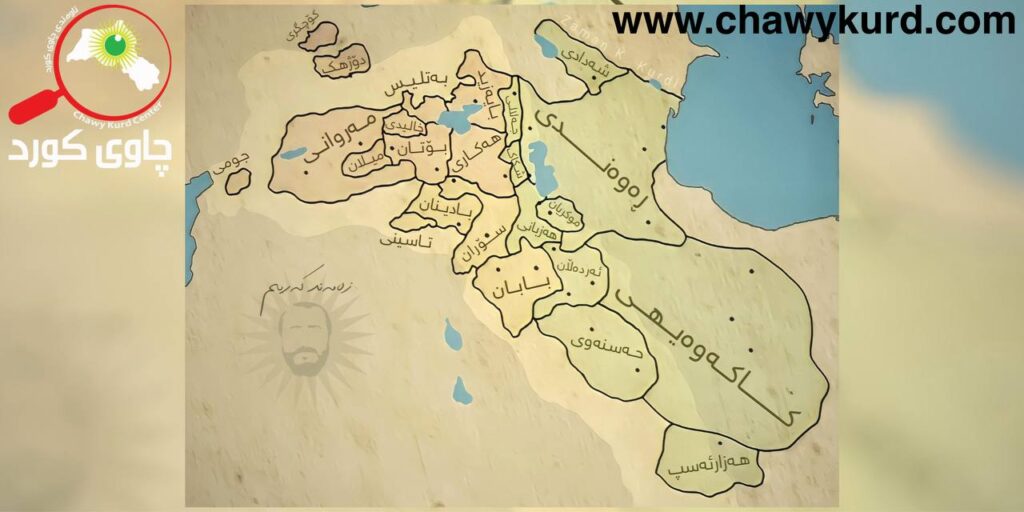
The emirates were a political system, semi-independent Kurdish institutions, at a stage in the history of the region in general and Kurdistan in particular played an influential role in the political, economic, social, and cultural. These emirates were established after the establishment of the Islamic Caliphate (Abbasid 132-656 AH). There are many common reasons for the emergence of the aristocratic system in most periods. They can be summarized in several points;
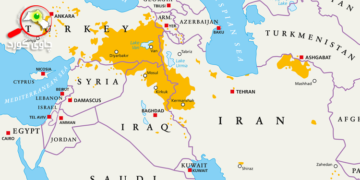
First; Geographical Nature of Kurdistan: Kurdistan is a mountainous region with many mountain ranges and most of the mountains are high. The difficulty of the region and its isolation from each other has had a significant impact on all the political changes that have occurred on Kurdish territory.
Second; Economic Independence: Due to the availability of water, fertile land, pastures, gardens and orchards, all the different regions of Kurdistan could meet their needs within themselves and through primary industry and trade exchange, and economic independence was an important basis for political independence.
Third; The breakdown of the culture of governance in Kurdish regions in previous centuries: A culture of unified governance is essential for any nation and community, but under the rule of reasons, this culture has always been divided in Kurdistan.
Fourth; Tribal regime and its role in the face of foreign invasions: The Kurdish gathering around their charismatic and brave men is due to the response to the threats and invasions of Kurdistan by foreign powers. The establishment of the Mukri Empire began in the late 9th century AD/15th century AD as a resistance to the rule of the Turkmen tribes of Aq Qoynlo.
Fifth; Castle and Defense Front: A historian has laid down an important basis for the importance of the great king establishing big cities, castles and high towers, but in Kurdish history at that time was of special importance. Their rulers are known as the owners of the front Castle and the Defensive Tower.
Sixth; Taking advantage of the weak times of the enemies: The period between the Mongol invasions and the Safavid and Ottoman invasions in terms of the rise and fall of the invaders’ power and the differences in the invasions considers as one of the characteristics of the political history of that period. The Kurds have taken advantage of this opportunity, the capable tribal chiefs after feeling the weakness of the central government and securing semi-independent power for themselves.
Seventh; Diplomacy of some Kurdish princes: Some Kurdish emirs have resorted to negotiations with the invaders in order to maintain the fortress and the boundaries of their rule. For example, Emir Ezadin Sheri Buhti, when he realized that he could not stop the invasions of Timur’s army In 824 AH/1421 AD, the Kurds of Mosh, Khalat and its surroundings gathered and went to visit Shahrukh son of Timur Lang, who acknowledged their rule.
Prepared by; Dr. Zhilwan Abdullah Haladni