





























“The region is facing insecurity situation”
The current situation in the region is characterized by geopolitical turmoil; everyone (states and actors) is in a state of deep security uncertainty due to the consequences of this condition that will change the nature of threats and imbalance of power. This situation is closely related to the regional security experience after the events of October 7, 2022.
With the possibility of repeated US and Israeli attacks on Iran, the states of the region in general and the Gulf in particular will be directly or indirectly involved in the potential threats of attacks and their consequences in terms of geopolitical security. This stems from the fact that Gulf states face violations of their internal security sovereignty, for example; Iran’s violation of Qatar’s sovereignty on June 23, 2025 and Israel’s attack on Qatar on September 9, 2020 have accelerated the Gulf countries’ review and assessment of the GCC’s assumptions and calculations on the sources of risks and threats, instability and how to address them.
Majid al-Ansari, an adviser to Qatar’s prime minister, spoke of a “new perspective on the threat,” especially after the Gulf appeared to become an arena for the Iran-Israel conflict. These developments have strongly highlighted the importance of a common Gulf defense and preparedness to respond to changes surrounding the Gulf States and the direct threats to their security consequences.
“Gulf region within the framework of the doctrine of prevention tensions”
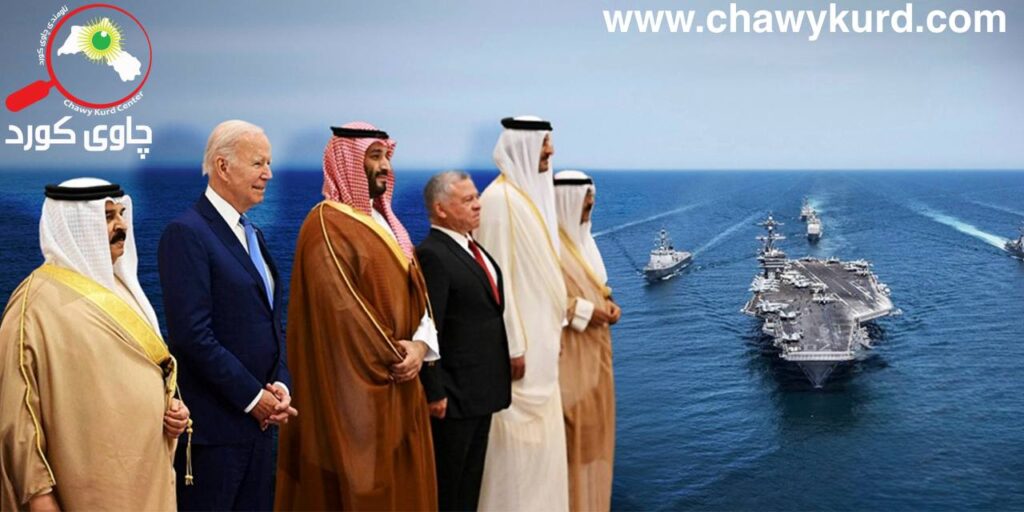
The Gulf region is characterized by bilateral efforts such as “strategic hedging,” which follow the principle of diversifying risks by minimizing foreseeable impacts. This is coupled with the Gulf capitals’ avoidance of involvement in confrontational alliances and fronts and their tendency to diversify their security partnerships with multiple actors, including the United States (and others).
In addition, in recent years they have adopted an approach that focuses on reducing escalation in various hot spots in the region, rejecting any regional war, refraining from any military action against Iran and continuing diplomatic and mediation efforts to reach a political settlement. But alongside the continued importance of investment in all these areas, it is essential to accelerate progress on the Gulf Defense Partnership Framework. This framework has accumulated five decades of experience and has built multi-functional military and institutional structures on the ground, achieving remarkable success. This precedent will continue to give new importance and implications for joint defense whenever the situation in the region intensifies.
“Strengthening military coordination”
Despite all this, these countries continued to strengthen their defense cooperation, especially during periods of regional instability. The launch of the 100,000-troop Unified Military Command at the Kuwait Summit in 2013 coincided with the chaos of the Arab Spring uprisings. This move could lead to more significant developments, such as the integration (or at least harmonization) of military doctrine that guides the armed forces of the Gulf States. Following the establishment of the Unified Command, other initiatives were undertaken, including the creation of the Joint Naval Coordination Center for Maritime Security and the establishment of the Gulf Academy for Strategic and Security Studies, aimed at developing a unified military education curriculum.
It is crucial to note that the diplomatic activity seen in Doha after the Iranian and Israeli attacks, culminating in an emergency Arab-Islamic summit on 14 and 15 September, reflected deep Gulf concerns about the source of threats to the region—a list that always includes other regional actors. An “extraordinary” meeting of the Joint Defense Council was held, which announced five tactical measures:
- Increased intelligence partnership through unified military command.
- Work to transmit a comprehensive picture of the air situation to all operational centers in the Gulf countries.
- Accelerate the work of the Gulf Joint Working Group on Ballistic Missile Early Warning Systems.
- Update joint defense plans in coordination between the Joint Military Command and the Operations and Training Committee of the Gulf Cooperation Council members.
- Conduct joint exercises between air operations and air defense centers.