




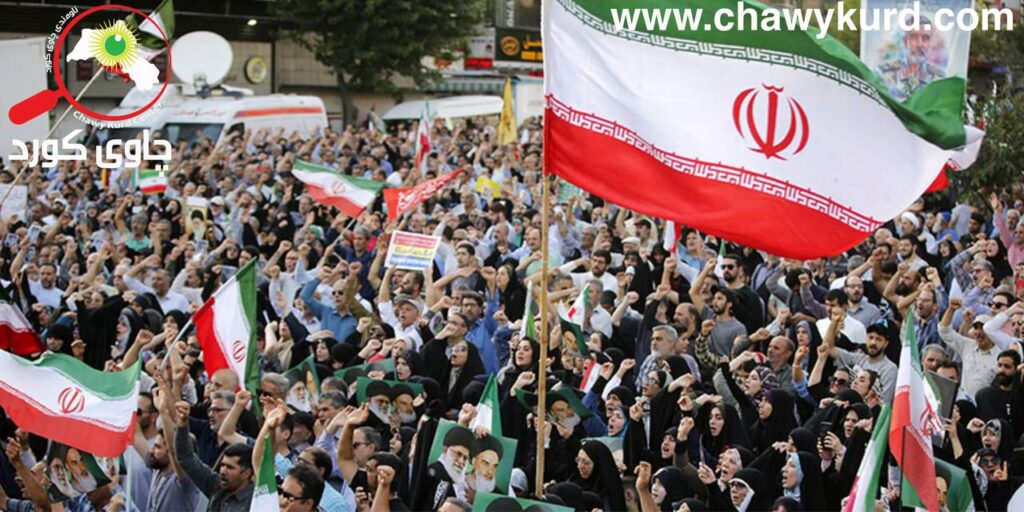
The Islamic Republic of Iran is currently going through one of the most sensitive stages in its history. After more than four decades in power, this political system is facing a series of accumulated domestic, regional and international crises that together have created unprecedented difficulty. The key question is whether Iran is headed for fundamental change, or whether the system is able to adapt and survive through repression and political maneuvering. This paper attempts to depict the future of this country to some extent by analyzing key factors such as succession, economic situation, social movements and foreign policy.
The first theme; the issue of inherit power and changing power structure”
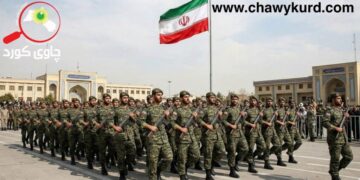
One of the most important and sensitive issues that directly affects Iran’s future is the issue of the inherit power of Supreme Leader Ali Khamenei. Given his age, the scenarios after his disappearance have been debated by strategic centers. There are currently two main scenarios. The first scenario is to transfer power to a figure close to the current circle of power, with Mojtaba Khamenei as the strongest option. This suggests an attempt to inherit power within the leader’s family, which could spark internal protests, even among some clerics in Qom and Najaf. The second and more dangerous scenario is the strengthening of the role of the Revolutionary Guards in determining the next leader. Many observers believe that Iran is moving towards a “military-security” model, in which religious institutions become a facade and real power falls to military commanders. This change could change the nature of the Islamic Republic from a theocratic system to a naked military dictatorship, which will have a direct impact on the way protests are handled and foreign policy.
The second theme; Economic collapse and systemic inefficiency”
Iran’s economy suffers from a number of chronic diseases that are difficult to treat within the current system. International sanctions, especially US sanctions, have broken the backbone of Iran’s economy, but the whole problem is not outside. Systemic corruption, waste of resources in military projects and support for armed groups abroad have made it impossible for the country’s revenue to meet the basic needs of its citizens.
The third theme; Breaking psychological barriers and social mobility”
The “Women, Life, Freedom” revolution, which emerged after the death of Zhina Amini, was a turning point in the relationship between power and society. For the first time, the demands were not just for economic reform, but directly targeted the legitimacy of the system and its religious principles. Iran’s new generation (Gen Z), which unlike previous generations is connected to the outside world through the Internet and social networks, does not accept the ideology of the jurisprudential state. The breaking of the barrier of fear and the rejection of the forced hijab as a symbol of power is a sign that the system has lost its “soft power” and relies only on “hard power” and repression to survive. This deep State-Society Rift will continue. Iranian society is becoming more secular, while the regime is trying to act more radical. This contradiction will lead to greater conflict in the future and it will be difficult for the government to survive for a long time without the consent of the majority of the people.
The fourth theme; Foreign Policy, East or West?
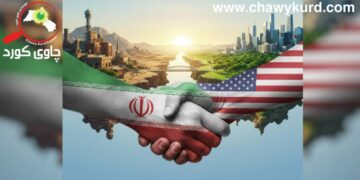
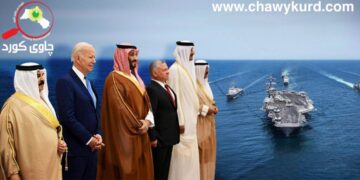
In terms of foreign policy, Iran has chosen a strategy of “turning east”. Strengthening ties with China and Russia is part of the system’s efforts to survive Western pressure. Indirect participation in the war in Ukraine by sending drones to Russia has further isolated Iran from the international arena and greatly reduced the chances of reviving the JCPOA. Meanwhile, the “resistance front” in which Iran has been investing for years has faltered. The Gaza war and the involvement of Iranian backward groups in the region have increased the risk of direct confrontation with Israel and the United States.
Future scenarios
Based on these analyses, three main scenarios can be depicted for Iran’s future;
- The scenario of continuing the status quo but in a more militarized manner: In this scenario, the Revolutionary Guards take full power. Domestic repression is intensifying, the Internet is completely controlled or cut off from time to time, and the country’s economy is becoming more militarized. This does not solve the problems, but may extend the life of the system for several more years. This is a “forced stay” scenario.
- Scenarios of collapse or radical change: Due to exhausting economic pressure and a sudden event (such as the death of the leader), a new wave of protests will emerge that the security forces will not be able to control or some of the forces will be out of command. This can cause the system to collapse or switch to another system. This possibility, although fraught with the risk of chaos, is becoming increasingly likely due to the deepening gap between the authorities and the people.
- Compromise scenarios and “heroic softness: This is least likely right now. It is that part of the mentality in the system comes to the conclusion that to survive they must compromise with the West on nuclear and missile issues and gives some social freedoms at home, but because the hardliners believe that any retreat will collapse the entire system.
Result
Iran is facing a decisive crossroads. The current model of governance has reached its lipaulipian stage and is unable to reproduce legitimacy. All indications such as economic, social, political show the situation will not continue in this way. Iran’s future depends on the competition between the “ability to repress power” and the “ability of society to endure”. Although the regime has weapons and money, the loss of human and social capital, and the opposition of the majority of the people, has shaken the foundations of that regime. Most likely, Iran’s next phase will be one of conflict and instability, even if the United States does not attack and collapse after Khamenei’s death. If the Revolutionary Guards can seize power, Iran will become a security-military state similar to North Korea, but with Middle Eastern characteristics. If mass pressure is combined with the economic crisis, fundamental change is not far off, and what is clear is that Iran cannot move forward with the current mechanisms and mentality without suffering a political earthquake.