







“Introduction; Identity in the Age of Forgetting”
In a world where borders are being crossed and hegemonies are being reshaped every day, the question of identity is more critical than ever. For many nations, identity may be a cultural or philosophical concept, but for a nation like the Kurds, identity means survival. Throughout history, Kurds have struggled not only for their homeland, but also for their “right to be existent”; for the right to speak their own language, for the right to remember their own history, for the right to write their own destiny. The modern world is, on the surface, a place of freedom and connection, but deep down it is full of soft domination and assimilation. In such an environment, the preservation of indigenous identity is as valuable as a quiet revolution. The new generation of Kurds, who have grown up in a digital world, political boundaries and environmental crises, are increasingly facing this fundamental question; “If you don’t see my tongue and hear my voice, who I am?” For this generation, identity is no longer just inheritance; it’s a project in the making. An identity shaped by collective memory, music, language, and life experience in segregation. They are redefining what it means to be Kurdish—not against others, but against their own forgotten selves. For them, identity-making is a journey between past and future, between pain and hope, between land and world.
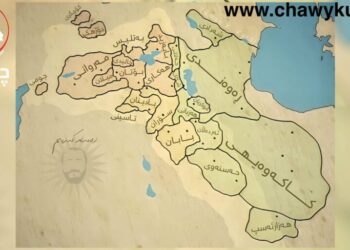
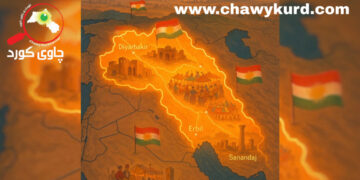
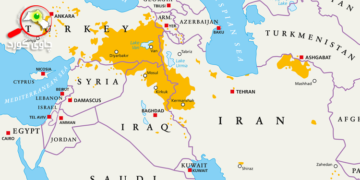
Kurdish society is divided on the external, but has a strange unity inside. From Mahabad to Qamishlo, from Diyarbakır to Erbil, from Ilam to Urmia, a common pain flows—a pain that has been transformed into collective memory through blood, song and poetry. The Kurds have understood that “forgetfulness” is more dangerous than “absence of a state”. For this reason, identity is more important to them than political power. Today’s youth seek politics not only in parliament or parties, but also in poetry, education, language and social networks. This generation is connected to the world; He speaks English or French, he has access to international films, but from his deep down has roots that no passport can replace. This root is the same mother tongue, the same mother’s childhood song, the same forbidden flag she carries in her heart.
“Language, Memory and New Media”
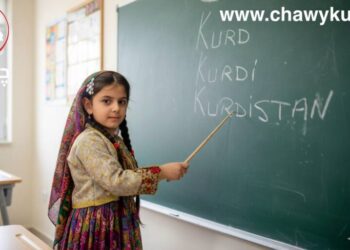
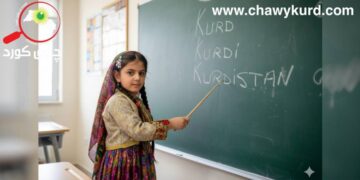
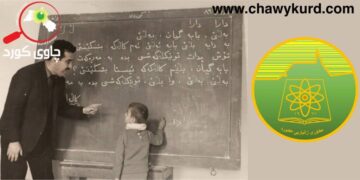
Language is the home of existence. Language is more than a means of communication for the Kurds; it is the memory of the nation. Every Kurdish word carries the memory of exile, the mountains, and a mother who sang a lullaby in silence so that no one would hear it. Decades of attempts to eradicate the Kurdish language have backfired. Today, young people around the world are using digital media to revitalize their language. Podcasts, YouTube channels, Instagram accounts, and translation projects are each a link in the chain of cultural awakening.
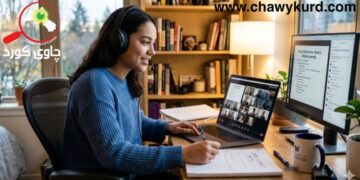
In Erbil and Sulaymaniyah, independent publishing houses are publishing Kurdish books. In Istanbul and Berlin, rap bands sing in Kurdish. In Paris, young refugees publish podcasts on Kurdish history and philosophy. Even in small villages, with poor internet connectivity, volunteer teachers offer online mother tongue lessons. This quiet Cultural Revolution is unlike any political movement. It is leaderless, but organized. It’s limitless, but it’s purposeful. Kurdish digital identity has now replaced the mountains; just as previous generations took refuge in the mountains, today’s generation is taking refuge in cyberspace — but with pencils and drawings, not guns. This change marks a cultural maturity; Fighting with consciousness, fighting with knowledge.
Finally, building an identity for the younger generation of Kurds is a kind of “existential struggle”; Not only against political hegemony, but against forgetting that this identity is not based on hatred of the other, but on love for oneself. In a world where cultures are in danger of disappearing, Kurdish identity is becoming one of the most energetic cultural movements in the Middle East. The Kurds may not yet have an official state, but there is something bigger than that; Nationhood in the Collective Mind and Memory. A nation that builds itself with its own language, women, poetry and consciousness will never disappear. As long as there is a generation that writes, reads and speaks in its native language, Kurdistan will live on – not only on the map, but in the hearts of every free-thinking Kurds around the world.