

























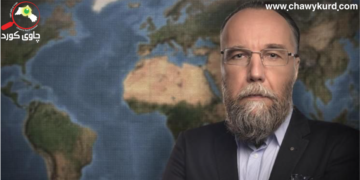
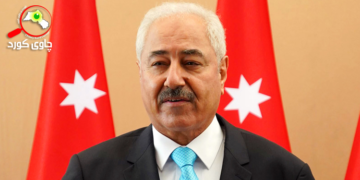




Martin van Bruinessen, the Dutch anthropologist and Kurdologist who has dedicated a lifetime to researching the ethnological society of the Kurds, has produced works in the fields of social structure, religion, tribal composition, and Kurdish national identity that serve as a foundational basis for understanding Kurdish anthropology in general. Van Bruinessen’s views, through a critical approach and field analysis, have created new opportunities for interpreting Kurdish society.
Methodological Foundations and Analytical Perspective
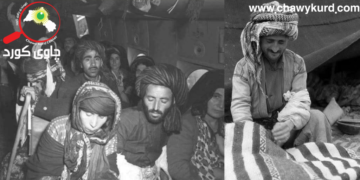
In his famous work, Agha, Shaikh, and State, Martin van Bruinessen employed a methodology distinct from previous researchers. Instead of relying solely on external historical sources and internal documents, he placed great importance on fieldwork and direct interviews with Kurdish inhabitants. He believed that understanding Kurdish society without living within it and participating in their daily lives is incomplete, making it impossible to grasp the realities. This approach allowed him to get closer to the reality of the lives of the Kurdish population, far removed from the Orientalist stereotypes that often appear in Western writings.
One of the most important characteristics of Van Bruinessen’s work is his focus on the internal structure of Kurdish society. He used the concept of the “tripartite structure” (Agha, Shaikh, State) to explain the nature of power distribution and authority within Kurdish society. According to his view, these three sides operate dialectically with one another and determine the form and shape of the society: the Aghas as tribal leaders and landowners; the Shaikhs as religious leaders and mediators of conflicts; and the State as an external force attempting to control both of these other parties.
Van Bruinessen points out that this structure is not a static system; rather, it is constantly changing, shifting its form according to political, economic, and social conditions. He also placed great emphasis on the role of religion and Sufi orders in Kurdish society. In his work Mullas, Sufis and Heretics, he discusses how the Naqshbandi and Qadiri orders played a significant role in forming the religious and social identity of the Kurds. However, at the same time, he points to the differences that exist between “Official Islam” (represented by the Mullahs) and “Mystical/Sufi Islam” (carried by the orders). Van Bruinessen refutes the views of previous researchers who defined Kurds simply as Sunni Muslims, proving that Kurdish religious beliefs are a complex and multi-faceted composition.
National Identity and the Kurdish National Movement
One of Van Bruinessen’s most prominent contributions is his analysis of the structure of Kurdish national identity. In one of his articles, he indicates that the Kurdish nation, in its modern sense, is a product of the 19th and 20th centuries, shaped by the political circumstances of that era. In his view, prior to that era, tribal, regional, and religious allegiances were more important than national allegiance.
He also explains the absence of an independent Kurdish state through several factors:
Geographic and tribal division: Which prevented the formation of a political union?
Continuous interference by regional states: (Ottoman, Persian, Iraqi, Turkish, and Iranian) which systematically suppressed Kurdish movements.
Internal competition: Between Kurdish leaders for power and wealth.
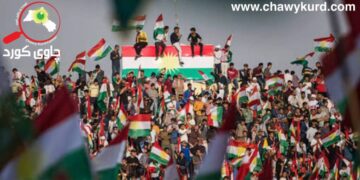
Nevertheless, Van Bruinessen criticizes the instrumentalist perspective of those who believe that Kurdish nationalism is merely a fabrication of political elites to gain power. He believes that although the Kurdish nation in the modern sense may be new, its roots go back to a shared feeling of language, culture, and history that has persisted for centuries. In works discussing Kurdish ethno-nationalism against nation-building states, Van Bruinessen explains how modern Middle Eastern states attempted to destroy Kurdish identity through policies of assimilation, erasure, and repression. He further discusses that these policies were not only unsuccessful but, on the contrary, became the cause for the strengthening of Kurdish national sentiment and the rise of armed struggle in many regions.
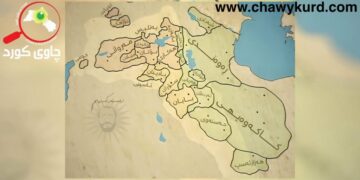
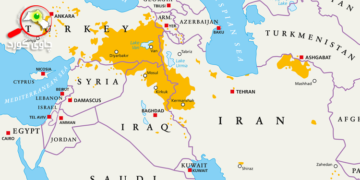
Van Bruinessen also observed the differences in the strength of national identity across different parts of Kurdistan. According to this view, Kurds in Northern Kurdistan (Turkey), due to harsh policies and marginalization, saw their Kurdish identity weakened compared to Kurds in Southern Kurdistan (Iraq), who achieved a degree of self-administration. This analysis reveals that Kurdish national identity is not equal or dogmatic everywhere but differs significantly based on political and social conditions.
The Impact of the State on Kurdish Society
A significant part of Van Bruinessen’s work consists of analyzing the relationship between the central state and Kurdish society. He discusses in detail how central governments interact with Kurdish Aghas and Shaikhs. He believes states have dealt with the Kurds using two main strategies:
Co-option (Corruption): Where the state attempts to bring Kurdish leaders under its control by granting them power, wealth, or official positions.
Repression: Where the state acts harshly and violently against those leaders who refuse to submit.
Van Bruinessen notes that in many cases, the enemies of the Kurds succeeded in creating division among Kurdish leaders; some Aghas and Shaikhs agreed to cooperate with the state to gain personal benefits, while others fought against the states. This division led to the weakening of Kurdish movements and prevented the creation of a strong national unity.
He also discusses 20th-century changes that had a major impact on Kurdish society. With the development of modern states and their goals to create a unified society, the classical system of Aghas and Shaikhs was weakened. Land reforms regarding the Aghas, limiting the power of the Shaikhs, and the creation of a modern bureaucratic system all caused fundamental changes in the structure of Kurdish society.
However, Van Bruinessen points out that Kurdish resistance against these policies manifested in various forms. In some regions, armed movements were stronger, while in other areas, people resisted by preserving their culture, language, and traditions. In his writings on popular Islam and religious practices, he discusses how Sufi orders and religious leaders played an important role in protecting Kurdish identity, even in areas under strict state control; this resistance became a center for Kurdish cultural and social resilience.
In conclusion, Van Bruinessen emphasizes that although the enemies of the Kurds succeeded in weakening the classical structures of Kurdish society, they failed to destroy Kurdish identity. On the contrary, repression and attempts at erasure became the cause for the strengthening of national sentiment and the creation of political Kurdish movements in the modern era.